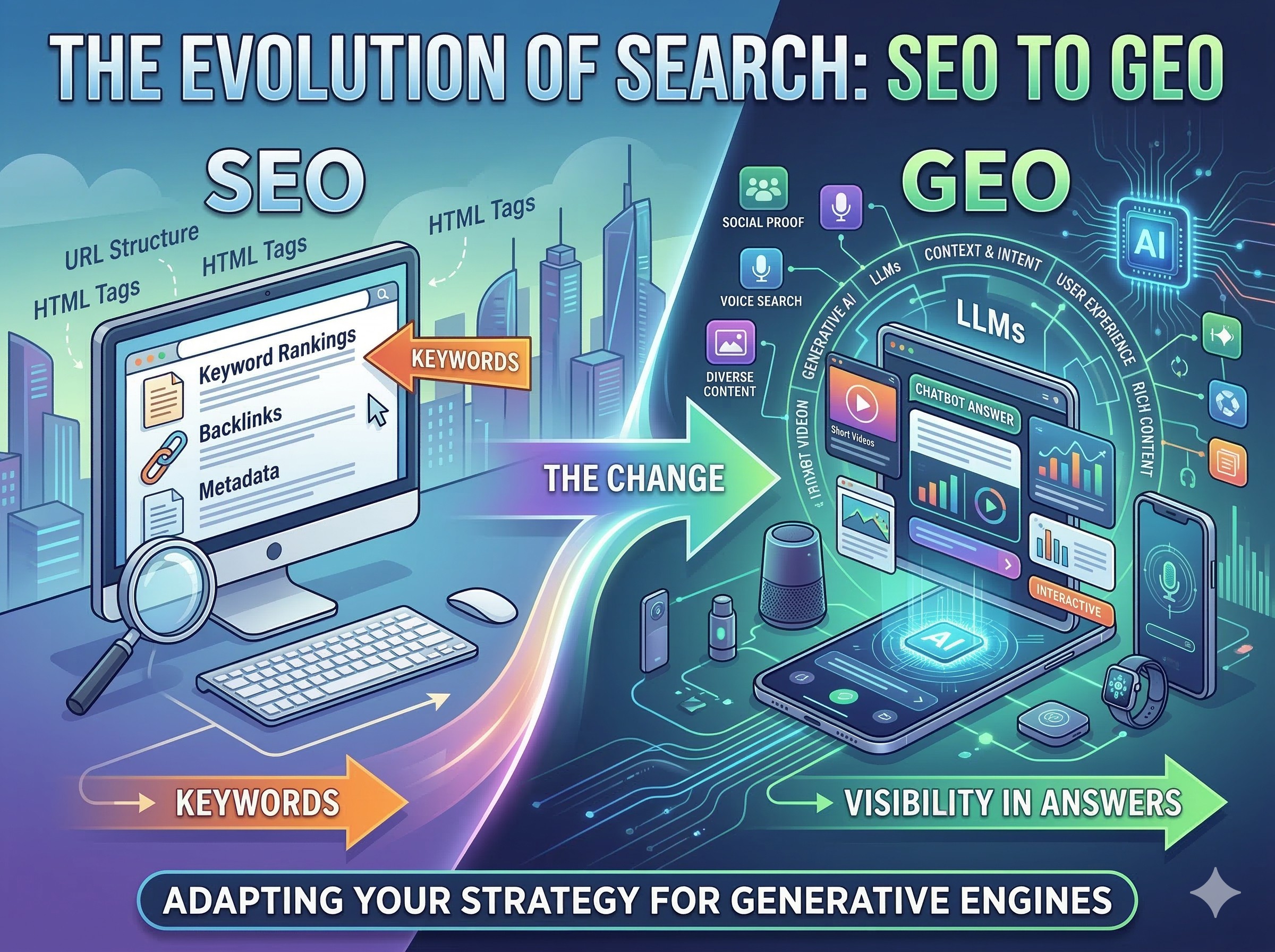
Is SEO Dead? How AI Search Is Changing the Way People Find Affiliate Sites in 2026
I’ve lost count of the number of times I’ve heard someone ask is SEO dead. Usually it’s some online guru trying to sell you the next big thing. And usually, SEO turns out to be very much alive.
But in 2026? I’m going to be straight with you — something genuinely has shifted. Not in a ‘SEO is dead’ way, but in a ‘SEO is being fundamentally rethought’ way. And if you’re building an affiliate site and relying entirely on Google rankings for traffic, it’s worth understanding what’s happening before it catches you off guard.
Let me break it down in plain language, the way I wish someone had explained it to me.
First, What’s Actually Changing?
Think about how you searched for information online two or three years ago. You typed something into Google, a list of ten blue links appeared, you clicked one, read the article, maybe clicked back and tried another. That’s been the model for decades.
Now think about how you — or the people around you — are searching in 2026. A growing number of people are typing questions directly into ChatGPT, Perplexity, Google’s AI Overviews, or similar tools. Instead of a list of links, they get a single answer, generated by AI, that synthesises information from multiple sources. Sometimes there are links. Often there aren’t.
LinkedIn’s Big Ideas 2026 list flagged this shift as one of the most significant forces reshaping digital marketing right now. And the data backs it up — AI-referred sessions jumped dramatically in 2025, and that growth is accelerating into 2026.
So what does that mean for your affiliate blog? Let’s get specific.
The Traffic Problem You Need to Know About
When someone asks an AI tool a question and gets a direct answer, they often don’t click through to any website at all. This is what’s called a ‘zero-click’ result. The AI has already answered the question, so why would they click?
Research from Ahrefs shows that in early 2026, only 38% of AI Overview citations came from pages that ranked in Google’s top 10 — down from 76% in earlier data. That’s a significant shift. Content that would never have ranked highly in traditional search can now be cited by AI platforms if it’s structured and written the right way.
Here’s the silver lining in that: the playing field is actually becoming more level for newer, smaller sites — including affiliate blogs like yours and mine — if we understand how to play by the new rules.
Enter GEO: The Concept You’ll Be Hearing Everywhere
GEO stands for Generative Engine Optimisation. It’s the practice of structuring your content so that AI-powered search tools — ChatGPT, Google AI Overviews, Perplexity, Claude, and others — can understand it, extract it, and cite it when answering someone’s question.
Think of it this way: traditional SEO was about convincing Google to put your page on page one. GEO is about convincing AI systems to quote your content when they answer a question. Instead of ranking in a list of ten results, you’re aiming to be one of the two to seven sources an AI engine actually cites in its answer.
The good news — and this is important — is that GEO builds on the same SEO foundations you’ve already been working on. Good writing. Clear structure. Genuine expertise. Helpful answers. All of that still matters. GEO doesn’t throw out what works. It adds a layer on top.
So What Do You Actually Do Differently?
Here are the practical changes that make a real difference for affiliate content in 2026:
Write like you’re answering a specific question
AI systems are built around questions and answers. Content that directly addresses a clear question — ‘What is the best free keyword tool for beginners?’ — performs far better in AI search than content that meanders around a topic. Start with the question. Answer it clearly, early.
Structure your content with clean headings
AI tools parse content by its structure. Logical H2 and H3 headings that map clearly to subtopics make it much easier for AI to extract and cite your content accurately. Think of your headings as a table of contents that an AI can navigate.
Add FAQ sections to your posts
FAQs are one of the most reliably cited content formats by AI search engines. At the end of any in-depth post, add 4-6 frequently asked questions with concise, direct answers. This gives AI systems easy, quotable answers to reference.
Show your experience and expertise
AI platforms prioritise what Google calls E-E-A-T signals — Experience, Expertise, Authoritativeness, and Trustworthiness. This is where your personal story works in your favour. First-hand accounts, specific results, and genuine opinions all signal to AI that your content comes from a real human with real knowledge. Not just filler.
Make sure AI crawlers can access your site
This is a technical point, but worth checking: some website configurations accidentally block AI crawlers like GPTBot and ClaudeBot in their robots.txt file. If AI tools can’t read your site, they can’t cite it. Have a quick look at your site’s robots.txt to make sure you’re not blocking them.
Does This Mean You Should Forget About Google?
Absolutely not. Traditional SEO is still vital, and Google is still driving enormous amounts of traffic. We’re not in a world where Google has been replaced — we’re in a world where it’s been joined by new search behaviours, and smart affiliate marketers need to be visible in both.
The approach that works in 2026 is what some experts are calling a ‘blended strategy’ — continuing to optimise for Google rankings while also structuring content so it gets cited by AI platforms. Conveniently, good writing serves both goals. The things that make an article genuinely useful — clear answers, expert perspective, logical structure — are the same things that both Google and AI systems reward.
What This Means for Your Affiliate Content Right Now
Here’s my honest take, having looked at this closely over the past month. The affiliate marketers who are going to thrive in the next few years aren’t the ones who churn out the most content. They’re the ones who produce authoritative, well-structured, genuinely helpful content that both humans and AI systems want to reference.
That’s actually good news for smaller, independent bloggers. You don’t need a big team or a massive content budget to be authoritative in your niche. You need depth, consistency, and a genuine perspective.
My own plan is to start revisiting some of my older posts — adding FAQ sections, tightening up the structure, and making sure I’m actually answering the specific questions my readers are typing into both Google and ChatGPT. Small changes, but they compound over time.
SEO isn’t dead. But it has evolved. And the sooner you understand what GEO is and how to apply it, the further ahead of most affiliate bloggers you’ll be.
💬 Have you noticed AI search changing how people land on your site — or how you find information yourself? I’d love to hear your experience in the comments below. Are you already thinking about GEO, or is this the first time you’ve come across the term?